
Paradise Island
Paradise Island is out now on PC, released on July 12, 2026.
About Paradise Island
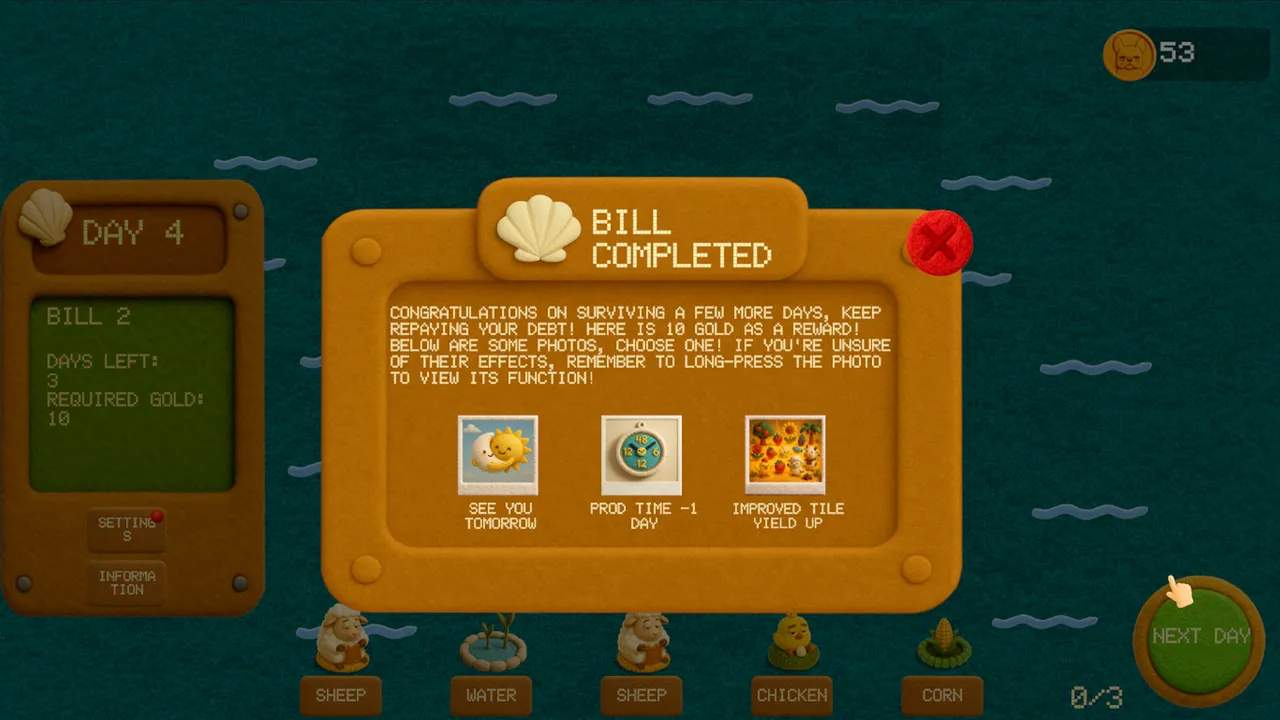
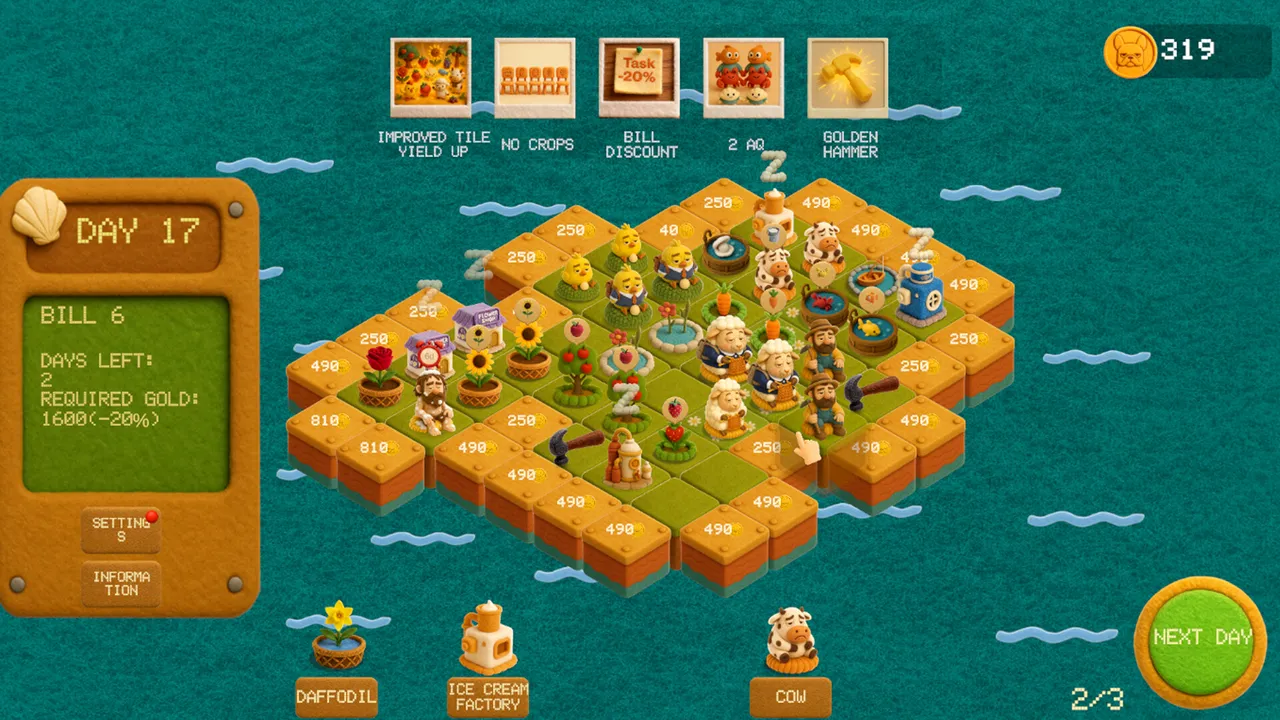
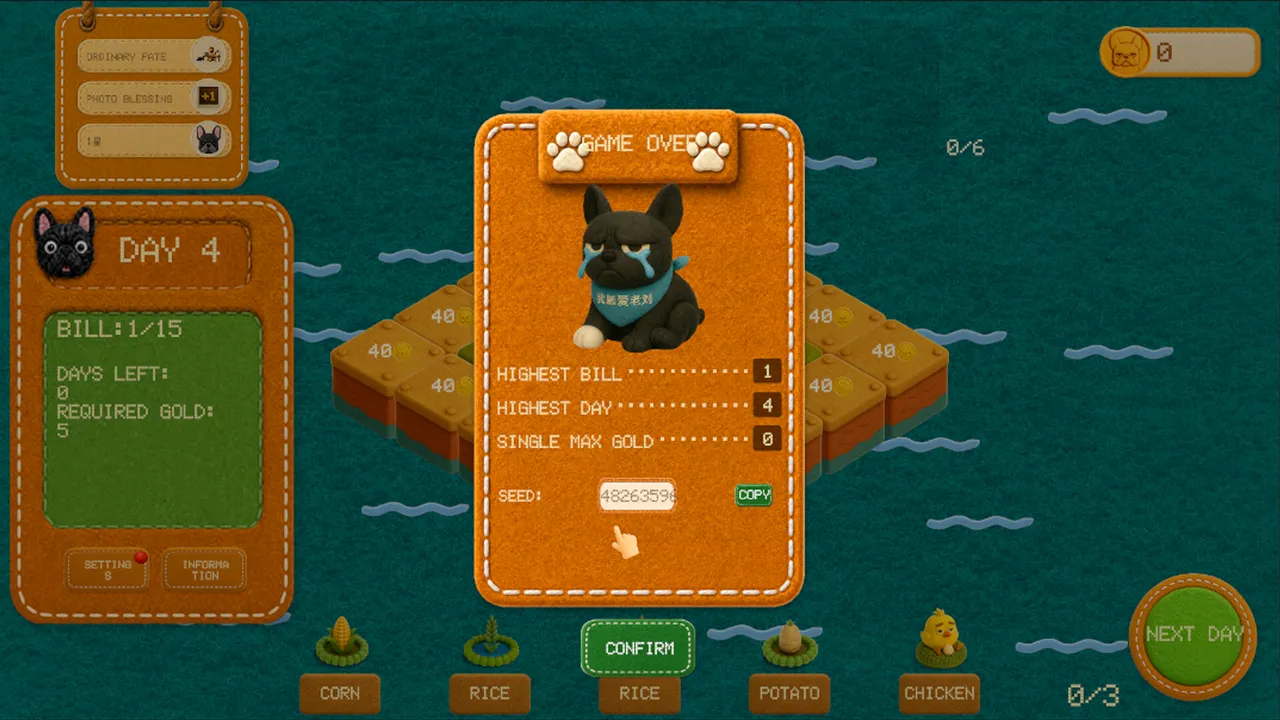
Paradise Island fuses three systems that should not work together—merge mechanics, roguelike card rewards, and relentless financial pressure—into a single, tightly wound economic survival loop. The release date is July 12, 2026 on PC. The premise is deceptively simple: you manage a small island farm, place animals and crops, wait for them to produce, sell the output, and pay your bills on time or fail. The bills are the spine of the entire game. They arrive with clockwork regularity, indifferent to whether your layout is beautiful or your farm feels cozy. They ask one question: do you have the money? If not, the run ends. Immediately.
Bills, Cards, and the Roguelike Engine
The trick is what happens after you pay. Instead of currency or equipment, the game rewards you with cards—photograph-style buffs that stack, synergise and reshape your strategy. With over 100 cards in the pool, the card selection after each bill becomes the real decision point. A run does not succeed on farm placement alone; it succeeds on which card combinations you acquire and how you chain them into one another to push your income high enough to meet the next deadline. This is where the roguelike DNA emerges: each run is shaped by available card rewards and the randomness of what draws you get to choose from.
The merit system sits between cruelty and fairness. Bills are inevitable and exact, which sounds punishing, but the card reward structure means every run grants you tools to improve your odds. You are not fighting blind randomness; you are managing risk through card drafting and resource timing. Whether the studio can maintain that tension across a full run—whether late-game card choices feel as consequential as early ones and whether the economic curve stays challenging rather than becoming either trivial or impossible—is the honest open question the game must answer.
Memory and the Room System
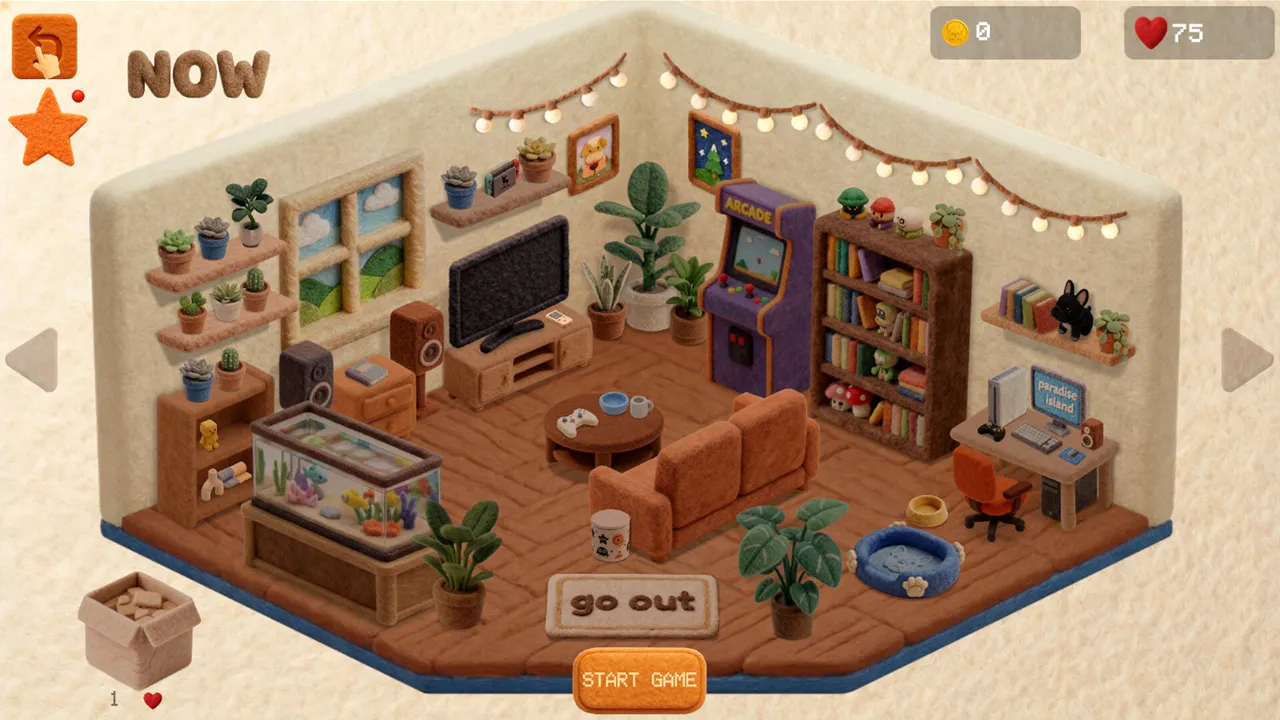
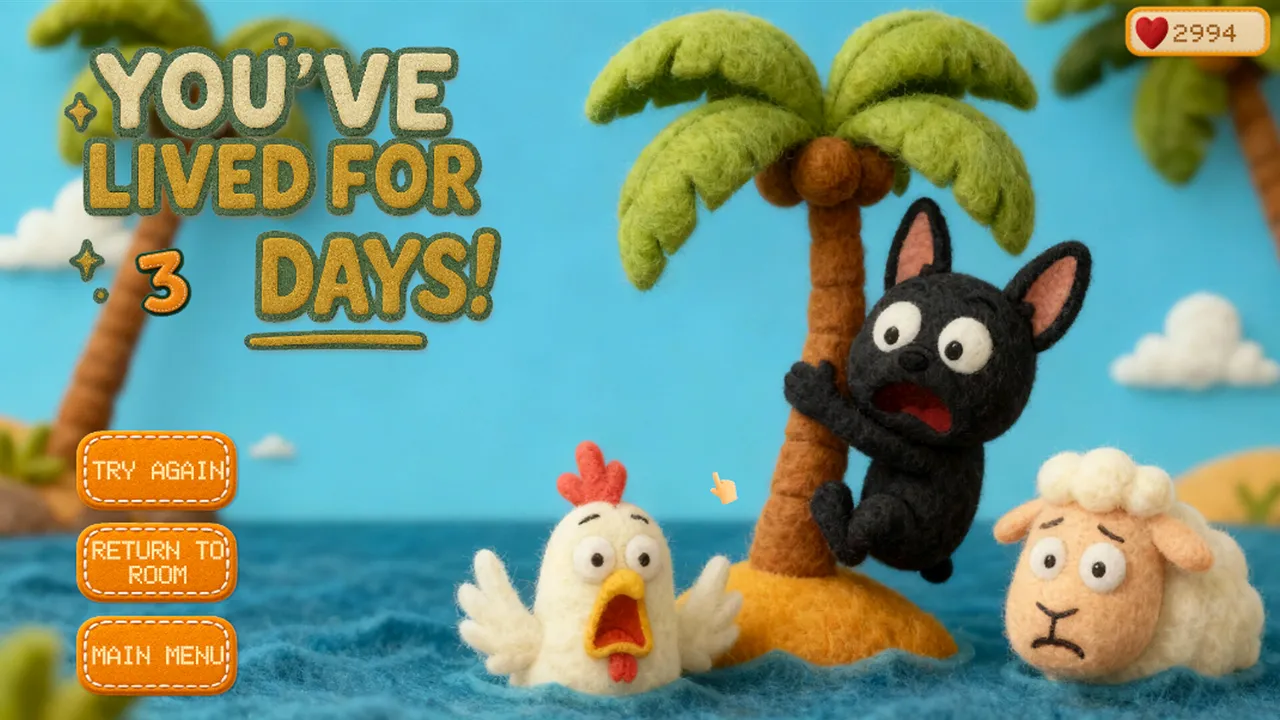
When a run ends, the game grants one more thing: heart currency. It does not improve your stats or your next run's income. It exists solely to decorate rooms with memories and decorations, a permanent gallery of past successes. There is no timer here, no bill collector, no threat. It is pure decoration and reflection, a space where players organise and display the artifacts of their runs. This mechanic signals something intentional: Paradise Island is not trying to trap you in endless grinding. It offers a contained, finite challenge (survive until the next bill), then a space to breathe and reminisce.
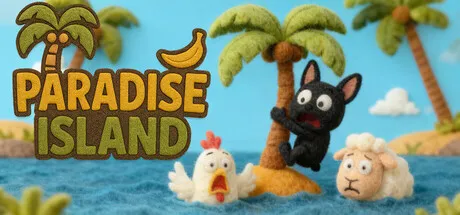
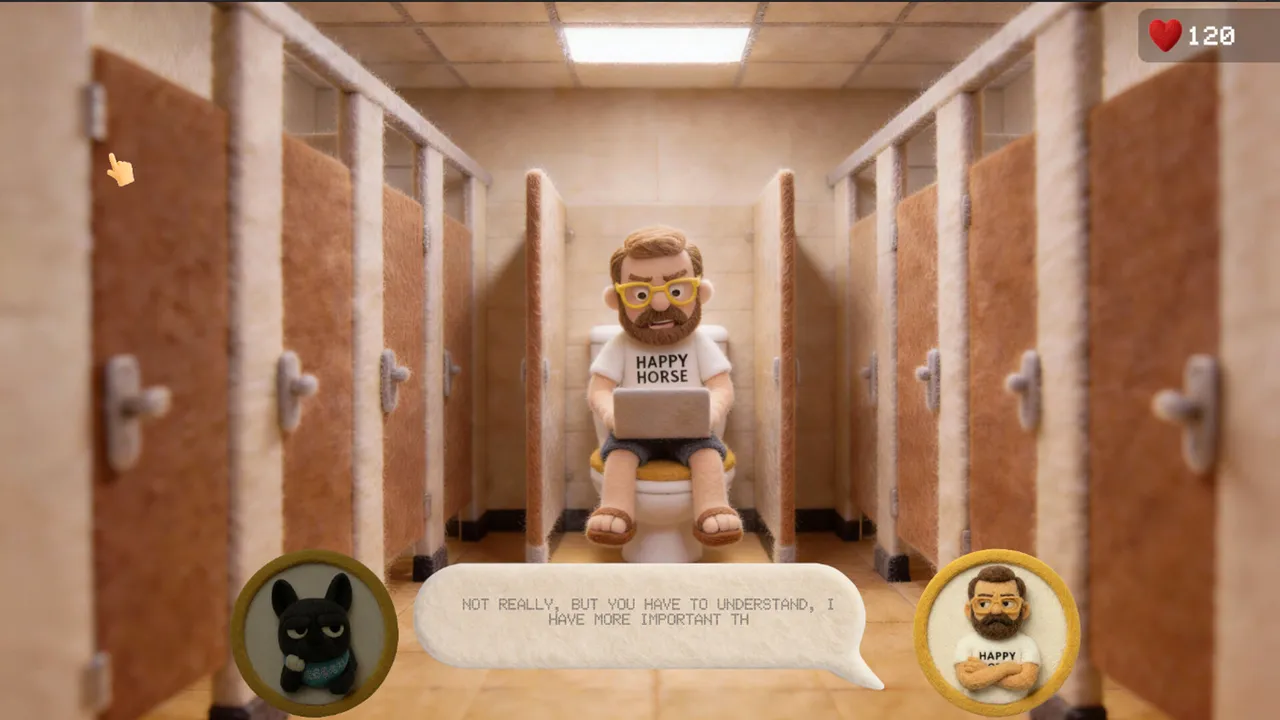
The art style reinforces the tone throughout. Everything is rendered in a felt and wool-craft aesthetic, softness applied to chickens, tables, crops, even the toilet. This is not accidental whimsy. It softens the edges of what is, structurally, a high-stakes economic sim. The visual warmth and tactile quality of the art buoys the experience above pure mechanical tension.
Solo Development and the AI Factor
The game was designed and developed solo by a non-technical designer using AI tools for art generation, animation and code assistance. This is not a limitation to overlook; it is the context that shapes what Paradise Island is. A one-person production without technical background means the scope is tightly focused: a single core loop, a finite number of cards, a clear endpoint. It also means the art style and tone are driven by deliberate aesthetic choice rather than technical capability—the felt-craft look is not what the developer had to do, it is what they chose to make. This kind of focused, vision-driven indie title often carries a cleaner design philosophy than larger productions.
The game is for players who thrive under time pressure and resource scarcity, who enjoy the tension of meeting deadlines and the strategic depth of synergy-based card selection. It suits anyone drawn to merge mechanics, roguelikes, or economic management who wants all three in one bite-sized package rather than spread across a longer campaign. Skip it if you dislike hard failure states, if you prefer open-ended farming without timers, or if you find card synergies taxing to track. For everyone else, Paradise Island arrives July 12, 2026 as a genuinely unusual indie proposition—a survival sim that leans hard into its cruelty and its gentleness at once.
Themes
Features
System requirements
Minimum
- OS *
- Windows 7
- Processor
- 2.5 Ghz
- Memory
- 512 MB RAM
- Graphics
- OpenGL 3.3
- Storage
- 1000 MB available space
- Sound Card
- Audio Codec ‘97
Frequently asked questions
When did Paradise Island come out?
Paradise Island released on July 12, 2026 for PC.
Is Paradise Island out yet?
Yes. Paradise Island is available now, having released on July 12, 2026.
What platforms is Paradise Island on?
Paradise Island is available on PC.

No comments yet. Be the first to share your thoughts.