

The Legend of Mala Tokmachka
The Legend of Mala Tokmachka is out now on PC, released on August 15, 2026.
About The Legend of Mala Tokmachka
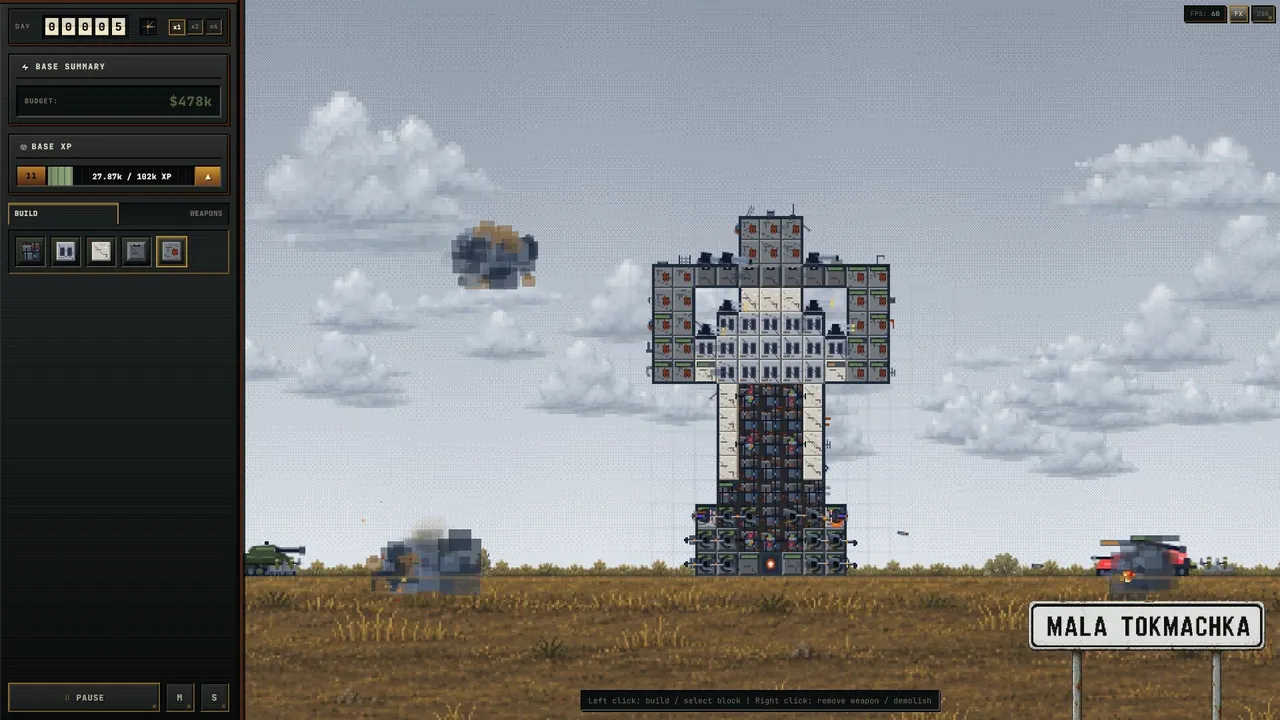
The Legend of Mala Tokmachka is a tower defense game built around a single, continuous design constraint: you must defend a fortress by constructing it in real time, and once a wall, weapon or support module is placed, you live with that choice as damage accumulates and enemies evolve. The release date for The Legend of Mala Tokmachka is July 15, 2026 on PC, and the game hinges on whether incremental, irreversible building decisions can sustain tension across a theoretically endless campaign.
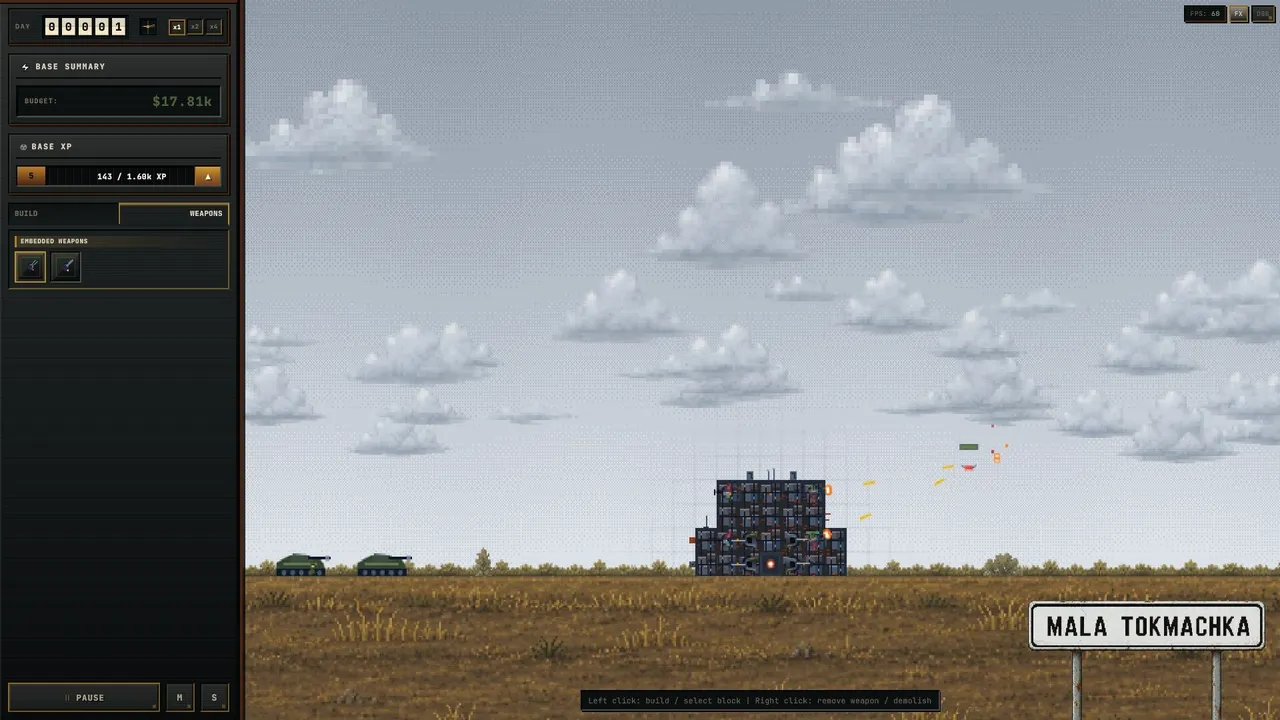
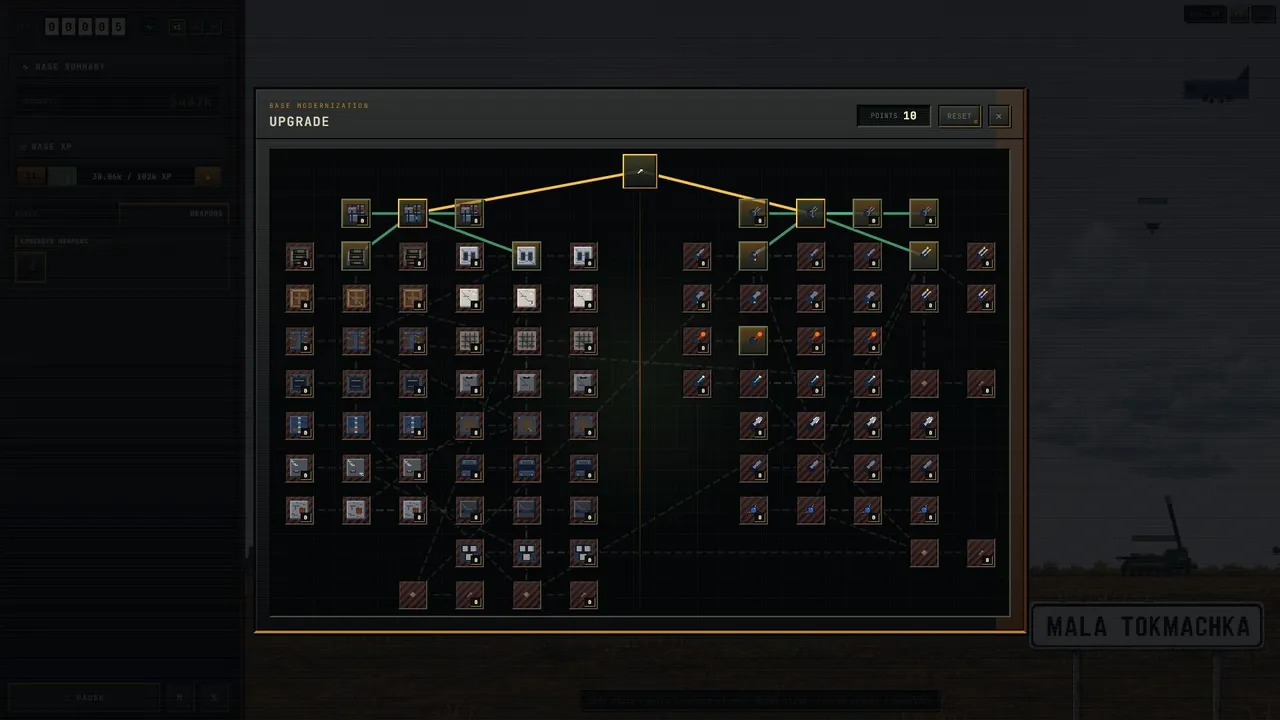
The core loop is deceptively simple. Between waves you place blocks—walls for armor, weapons for firepower, radar for intelligence, repair systems to mend damage—then watch your structure endure ground assaults, air strikes, artillery and drones. Each placement is permanent until destroyed, which means your fortress becomes a physical record of every tactical gamble, every miscalculation, every section you abandoned as indefensible. There is no bulldozing and rebuilding; there is only adaptation, reinforcement and choosing what to save when overwhelmed. This is the pivot the game rests on, and it separates it from conventional tower defense, where you typically manage an abstract menu of unit spawning. Here your fortress IS the strategy, and its shape directly reflects how you have chosen to fight.
Fortress as Permanent Decision
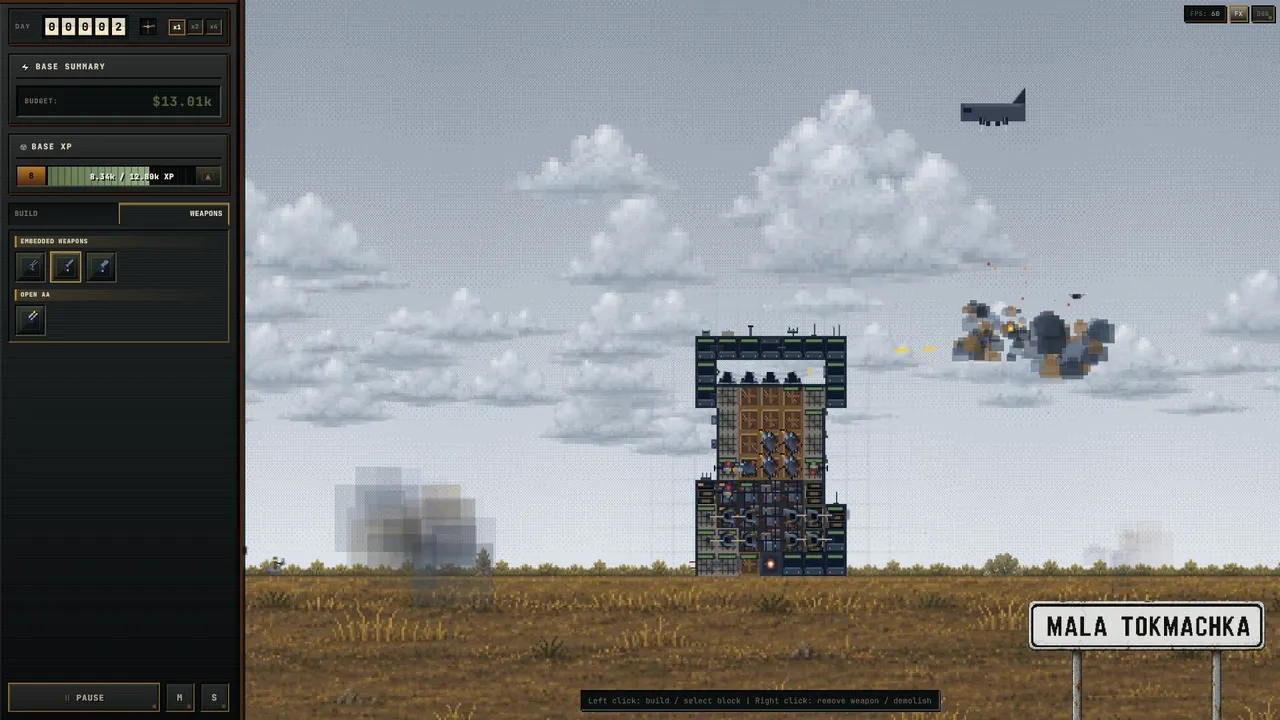
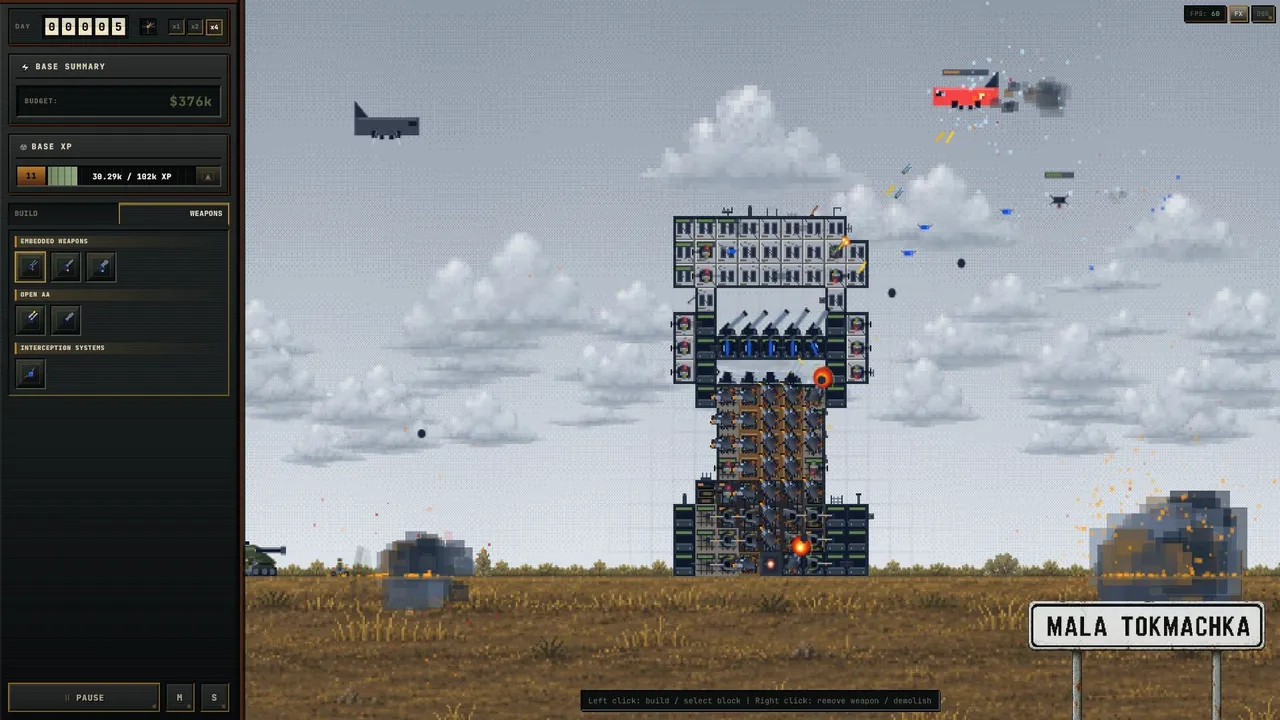
The design trades tactical flexibility for strategic commitment. A compact, armored tower plays very differently from a sprawling, multi-level structure bristling with turrets. You cannot pivot mid-campaign into a completely new design; you can only patch, extend and reinforce what stands. This means early decisions compound. A fortress built tall and narrow must manage incoming fire from a small footprint. One built wide and distributed spreads defenses across more area but becomes harder to repair efficiently. The longer a siege persists, the more your fortress becomes a scar tissue of amendments—sections rebuilt after breaches, weapons repositioned to cover new vulnerabilities, power routed around destroyed subsystems.
Whether the release date and this core mechanic can sustain interest through a theoretically infinite campaign is the genuine question. Casual and simulation players may find endless escalation satisfying, especially if visual destruction and fortress evolution feel rewarding. Strategy players accustomed to clear victory conditions might find the absence of a goal—just survive, just last—either liberating or exhausting depending on personal tolerance for attrition without resolution.
What Endless Pressure Demands
The game populates its waves with aircraft, armored vehicles, artillery, drones and missiles. This variety forces you to build defensively against multiple threat angles simultaneously: ground perimeter, air coverage, anti-armor positioning, power resilience. A fortress that handles ground assault may collapse to bombing runs. One optimized for air defense may crumble to a concentrated armor push. This demands continuous rebalancing, but only through construction, not through sudden repositioning. Your defenses are not units you move; they are blocks you build, and they stay where they stand.
The game is a single-player, narrative-light experience set in a nameless frontier village where the siege has become legend simply because it endures. There is no campaign arc, no stated endpoint, no final boss, just escalating pressure until your fortress fails. This is a bold design stance. It commits fully to the premise that survival itself is the story, and that watching your creation stand and crack under mounting pressure is the entire experience.
If you thrive on incremental fortress building where every placement matters permanently, and you are comfortable with a game that offers no victory condition beyond personal endurance, add this to your wishlist. If you need structure, progression milestones or a narrative frame, wait for reviews to assess whether the mechanical loop has depth enough to sustain an indefinite run. If casual strategy that rewards adaptation over optimization appeals to you, the July 15, 2026 release date marks the moment to buy it fresh.
Features
System requirements
Minimum
- OS
- Windows 10 64-bit
- Processor
- Intel Core i3 / AMD Ryzen 3 or equivalent
- Memory
- 4 GB RAM
- Graphics
- Integrated graphics with WebView2 support / Intel UHD 620 or better
- Storage
- 500 MB available space
- Additional Notes
- Requires Microsoft Edge WebView2 Runtime
Recommended
- OS
- Windows 11 64-bit
- Processor
- Intel Core i5 / AMD Ryzen 5 or equivalent
- Memory
- 8 GB RAM
- Graphics
- Intel Iris Xe / AMD Radeon Vega 8 or better
- Storage
- 1 GB available space
- Additional Notes
- SSD recommended; WebView2 Runtime required
Frequently asked questions
When did The Legend of Mala Tokmachka come out?
The Legend of Mala Tokmachka released on August 15, 2026 for PC.
Is The Legend of Mala Tokmachka out yet?
Yes. The Legend of Mala Tokmachka is available now, having released on August 15, 2026.
What platforms is The Legend of Mala Tokmachka on?
The Legend of Mala Tokmachka is available on PC.





No comments yet. Be the first to share your thoughts.